
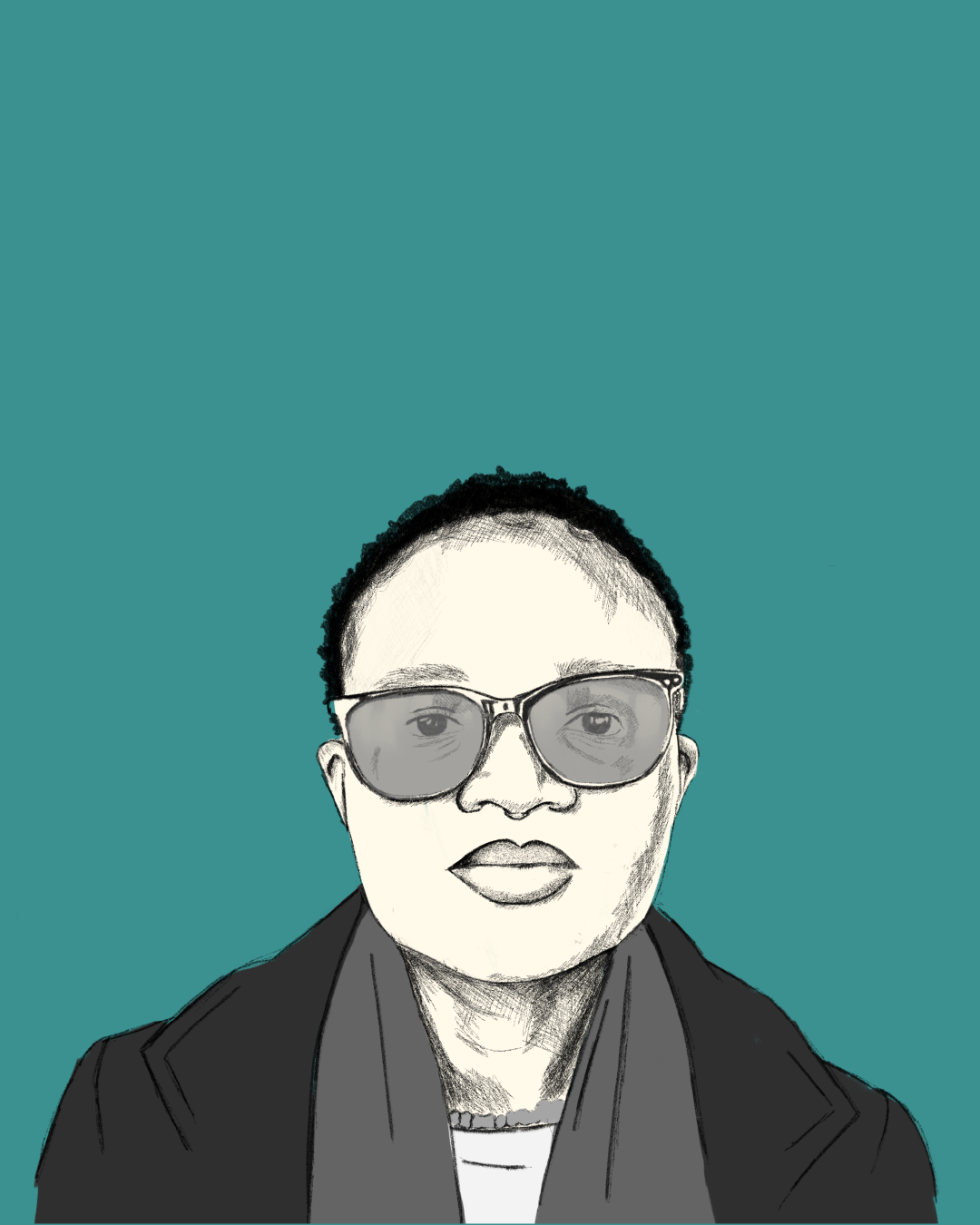
June 25th 2024
Running. The sting of teargas making my eyes water. Running. Losing my friends in the crowd. Panicking. More running. Finding my friends. Holding their hands like my safety depends on it. Taking a break to reapply toothpaste under my eyes. Glancing at the police officers standing atop the Express Way, guns ready to fire.
Running. Crossing Uhuru Highway and encountering a group of protestors marching to Parliament. Should we follow them? More teargas. More running. We decide home is a safer bet. We get to Uhuru Park, and the trees bid us to breathe a little slower. But even as we do, our hearts are chanting “Ruto Must Go,” just as the placards. And we are still running.
Later in the evening, we put on the news and shrink into our seats. The death toll comes on screen. 22 protestors. More wounded. And there are still some being abducted and disappeared. Our hearts are shattering. Not all of us made it home alive. We shift closer to each other, extending a hug here, a sad smile there. We are acknowledging how lucky we are. but we are also acknowledging something else — the grief engulfing our bones.
But the President, does he acknowledge this grief too? No. When William Ruto makes his speech, he calls us treasoners, he calls us disobedient, he even calls our parents irresponsible for not teaching us how to behave. He calls us everything but what we are. Brave. Courageous. The children who dared to stand up and demand to be heard.
18th June 2026
It is two years later since the 2024 Reject Finance Bill protests. I am getting off an Uber at the Kenya National Theatre to attend an Open Mic event by Female Poets Kenya and Poetry After Lunch. It is a Thursday. The day is cold. I have on a beige hoodie, a maroon jacket and green trousers. I am shivering, but it has nothing to do with the weather. The truth is, in the days leading up to this event, my emotions have been all over the place. I could not figure out what was wrong with me; why I would find myself staring blankless in space, or why my body would sometimes feel like such a heavy burden I was carrying with every step I took. I wanted to let it all down, but I did not know how, because I did not know why. Then, as I walked to the stage, Wasanii Corner, I realized that perhaps the heaviness in me had everything to do with the theme of the Open Mic — June 25th.
What do you say about such a date? Such a day? Such weeks that saw us going to the streets, convening on X spaces, sending each other protest memes, laughing at the AI-generated Kasongo pictures lying in a coffin only to mourn and grieve as our friends and relatives were now the ones lying in the coffins in real life? What do you say about the abductions, about the fear that gripped us at every turn, and especially when we saw a black Subaru approaching? What do you say about the constant feeling that you might be the next statistic, the next news item, the next person that your villagers come to collect remains of and bury in your homestead? What do you say about the rage, the bravery, the terror that was so loud in everything we did? What do you say about June 25th?
Nothing and everything.
I reach Wasanii Corner, and spot Wangui Kimani, a poet and co-founder of Female Poets Kenya, sitting next to Camilla, another poet. I approach them, and when they ask how I am doing, I say I am okay even though I feel everything but. I scan the space. All around me are young poets I know and some I would later be introduced to. Musir. Griffins. Inka Rose. Tum. Jerry. Extrovartist. Kuni Mbichi. Treasure. They are all here for the same thing I am — to try and say something to commemorate the Gen Z protests. Something they feel should be said, and not only said in plain words, but through the use of their lyrical prowess.
Because for us, poetry is the surest way we know how to remember June 25th. In verse. This is how we know how to articulate our pain. Our rage. Our grief. When we are holding that pen, or standing in front of that stage, this is the only time we can let the emotions stifling us run free. And we hope, god do we hope, that someone would listen and say, yes, I hear you. Come, lay down your burdens and let me help you carry it.
That is the reason why, when Wangui asks me again if I am okay, I finally confess to her and say, “I don’t think I am, but labda nikiperform nitafeel much better.”
I put down my stage name in the performance book, and when my name is finally called, I stand up, walk to the stage, situate myself in front of the mic, and after clearing my throat, I begin:
in the dark, i try to find the colours of my culture.
black is imali & white is indafu but there is nothing
imali & indafu in the way my people move.
they shake shoulders like shaking death.
the isikuti. a vigorous dance for the dead.
a requiem with drum skins & metallic jingles
tearing through air; all colour vibrating through a melody
when ash returns to ash & dust to dust.
grey is ye rikohe.
here, colours are named after things
or things are named after colours so grey is ye rikohe
& rikohe is ash. it is poetic if you do not take into account the
brownness of the earth opening up, ready to receive a body as
a meal. but who belongs to this body now? surely not
the country that killed it & watched it die. surely not the streets
that let its blood flow. surely not my people shaking shoulders
like shaking death.
who claims this body?
who lays a claim to the redness stuck in its veins?
remember: here colours are named after things
or things are named after colours. red is
ya mabanga & mabanga is blood is what you find when you
cut open a skin is what you find when you look at my country’s
flag is what you find when you ask the meaning and they say:
it is to remember all we gained in the fight of ‘63. forgive my
foolishness, but what sort of victory is this that still let bodies
go unclaimed? what sort of victory is this that denies
its citizens’ air to breathe & laugh when they choke?
it is crystal: this country never knows how colours are born so it
never knows beauty. it lives in the ugliness & wants us to live
in it too. not me. i will show it what beauty is. in this
darkness, i will strip all the colours & show how they are born.
i will say to everyone that passes: do you know yellow is na mabuyu
& mabuyu is eggs like the ones your lover prepares in the morning;
an assurance of love? do you know green is ya masafu & yamasafu
are also leaves floating in the wind; a reminder that kindness
lives within the subtlety of nature?
do you know black is imali
& white is indafu & to claim back beauty
is as black & white as this?


