
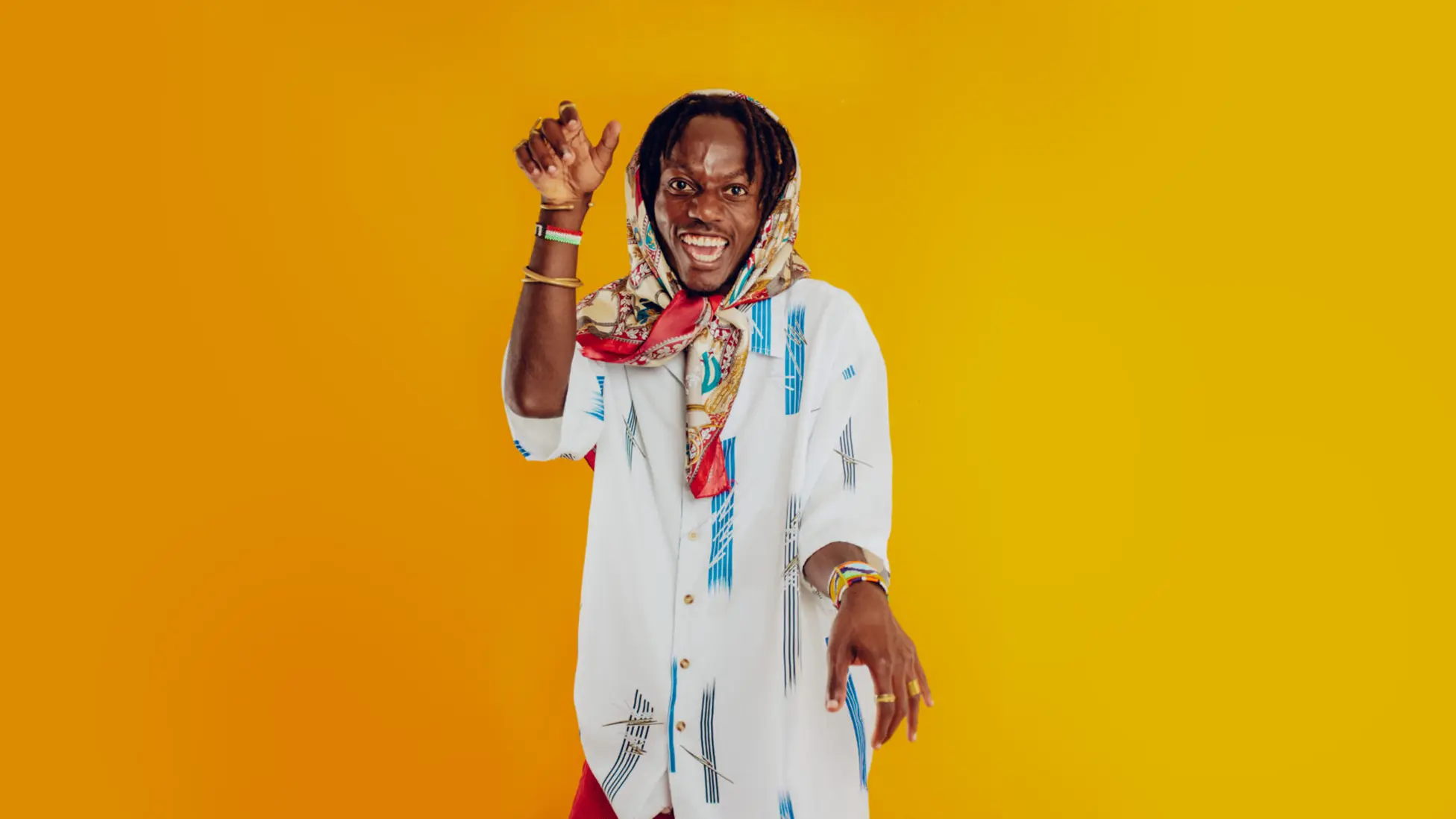
Alex Nzolo Muthama, popularly known as Lexas Mshairi, is a Performing Poet, Art Therapist, Author, Musician, Songwriter and Instrumentalist from Machakos. Currently based in Nairobi, since 2018 he has used spoken word poetry to advocate on political reform, climate justice and social progressivism. Lexas holds a B.A in Psychology and a minor in Sociology from Kenyatta University and is the co-founder as well as the events co-ordinator and digital marketer of the artist’s collective Rafinki. Frank Njugi spoke to him on his recent sold-out show Roga Nisiroge ?, which was staged at the Kenya National Theatre, the multilingual delivery of his poetry and the state of Spoken Word in the country.
Frank: Congratulations on your August 29th show, Roga Nisiroge? , at the Kenya National Theatre. How did it feel seeing the turn up and the audience reception to your show ? Do you think happenings like this, that is you being able to sell a poetry show at the KNT, imply the coming of age of the Spoken word scenery in the country ?
Lexas: I feel that the poetry performance scene in Kenya is growing gradually. Poets in the country are investing much resources into their art form and therefore there are positive changes that we are seeing. In the last few years, we have witnessed a significant growth in the number of poets who are staging their own concept shows, releasing albums and anthologies and earning a living from the same. This I believe is just the preamble to the much more that is ahead of us.
Witnessing the reception that the audience gave the Roga Nisiroge? experience filled me with so much life. Since then, I’ve been filled with a stronger sense of purpose in the creative work that I put out. I endeavour to continue inspiring others to be self aware and fulfilled in the lives that they lead.
Frank: You are part of a collective, Rafinki.
Do you think the activities of such artist’s organisations are essential to the growth of spoken word artistry in the country?
Lexas: Rafinki is a dynamic literary organization that empowers literary artists to explore, express, and cultivate their creativity. Spaces that are being created by Rafinki and other like-minded organizations are crucial for the growth of the literary and spoken word scene in Kenya. One of the many ways that Rafinki is supporting creatives is by providing a community where up-and-coming artists can showcase their work, network with peers, and deepen their connection to the arts. Rafinki is doing this through workshops, open mic events, collaborations and numerous showcases.
Frank: You tend to use music to add a flair to your performances, as witnessed during your Roga Nisiroge? show. What are your thoughts on the relationship between not only music but also other art forms with poetry?
Lexas: Music, for a start, borrows from poetry. To this effect, I see other forms of art equally related to it. What keeps me awake at night is the seamless integration of these other forms to aid in my storytelling. This has led me in the path of learning to play instruments, film production and a recent desire to grasp the in and outs of music production and digital art. Such and more pursuits enable me to be fully immersed and take as much control of my work as possible.
Frank: You are a multilingual performer who uses English, Swahili, Kamba and also Sheng at times. In your debut poetry collection titled Roga Nisiroge ? as well, you have used a mixture both Sheng and Kamba. What do you think is the primary role of language in poetry?
Lexas: The greatest goal of artists, such as myself, is to be able to express themselves as they communicate. Over time, I’ve personally grown fond of writing and performing in multiple languages. What this has done is open for me a range of possibilities and avenues for progress. I love that I’m able to use and manipulate language to evoke emotions, create vivid imagery, and convey complex ideas in a condensed and human form.
With my first book Roga Nisiroge?, I aimed to take everyone who read it on a journey that explores the complexities of healing. My use of two primary languages, Sheng and Kamba, was out of the need to authentically express my feelings and thoughts in a way that my readers would relate through our shared realities. The poems in the book were inspired by true events and stories from my hustling and bustling in this city; Nairobi.
Frank: I have known you to talk about using spoken word poetry for therapy. Can you tell me a bit about this? How does your background as someone who graduated with a major in psychology intersect with your spoken word poetry?
Lexas: My degree in Psychology (minor in Sociology) has played a significant role in my understanding of human patterns and behaviour. Often I’m just writing for one person in the audience; the struggling one who is in need of some subtle reprieve. Numerous times though I’ve used this same art form to reclaim myself on days whereby gloom has darkened my world. My desire is to allow others to tap into how art can heal and serve as a wonderful reflective surface.
Frank: There is a quote by Greek poet, Menander, which says “ Spoken Word poetry is man’s physician in grief; the only art with soothing charms for the soul”. What are your thoughts on this ? And in conclusion, we know every creative derives their inspiration from somewhere. What inspires you to keep creating your art?
Lexas: I totally agree with the Menander quote. Poetry, particularly when spoken, has a unique ability to offer solace and healing. It’s magical in how it resonates deeply with people from all walks of life. Perhaps it is through a poet’s vulnerability as well as the audience’s openness to it that brings the communal shared human experience and empathy. Spoken word poetry speaks to the soul, anchoring us in hope at times that we are grieving.
In terms of my inspiration as an artist, most of it comes from life itself. But also so many other spoken word artists who have come before me have inspired me. I am grateful to people like Dorphan, Qui Qarre, Kym Chokera, Slim Shaka, who have held my hand.


