
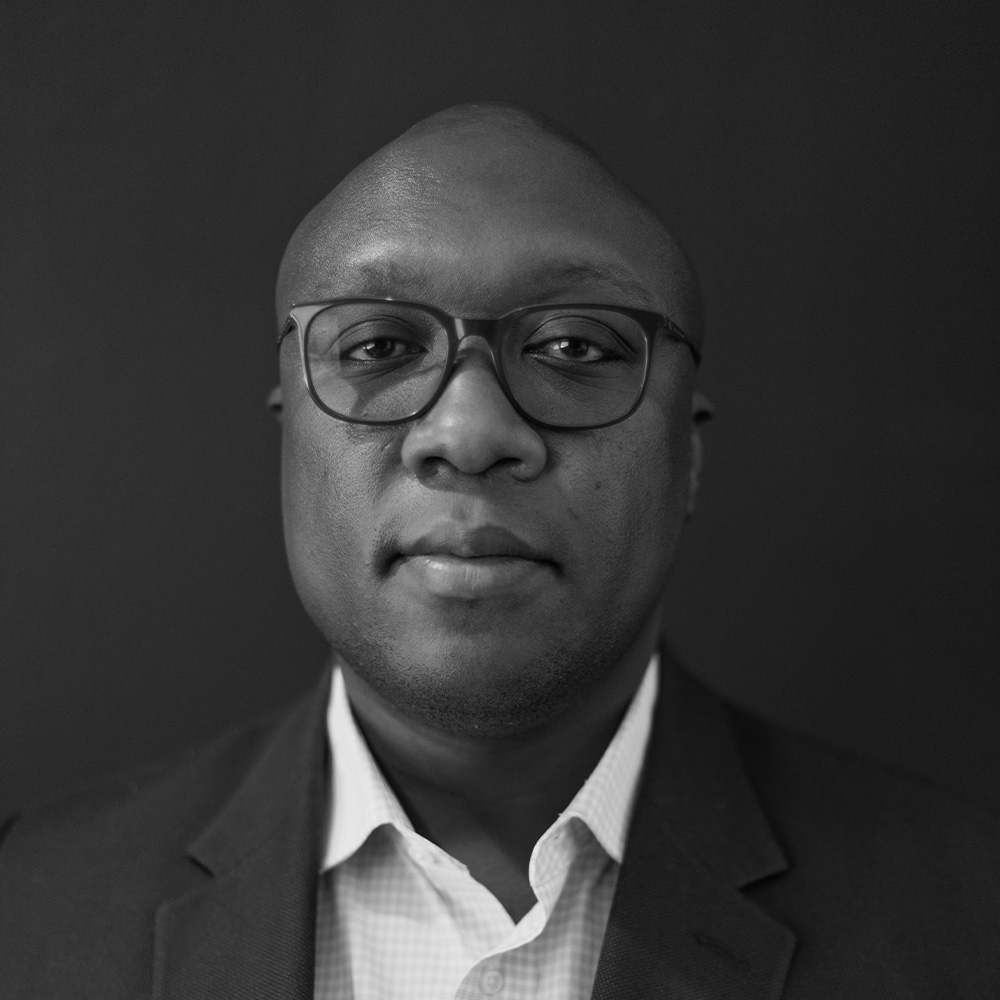
Fate, the misfortune of losing Raila Odinga and the misadventures of Oburu Odinga, his handlers and hangers-on have all conspired to make Edwin Sifuna into the man of the moment.
Rarely has it happened that a first-time legislator manages to capture the country’s imagination in the manner Sifuna has, so much so that a potential presidential bid, tall order as it may be, seem and sound, has suddenly become a popular point of national conversation.
To his credit, Sifuna paid it forward.
While serving as Raila Odinga’s secretary general, Sifuna built the profile of a straight-talking anti-establishment politician who spoke against government excesses, particularly at a time when his leader Raila and party the Orange Democratic Movement were canoodling with the regime.
And now, as Sifuna is riding the euphoric Sisi Ndio Sifuna whirlwind across Kenya’s breadth, circumstances are forcing him to simultaneously heed the call and step up to the plate and become the leader the moment demands.
The jury is still out as to what exactly this leader of the moment is – is it a leader of a political party or movement, is it a presidential candidate for 2027, or is it a senator for Nairobi who commands a national constituency – but whatever it is, Sifuna is being urged to graduate into it.
And so, as Vladimir Lenin asked in 1901, what is to be done? Sifuna needs to get a notebook and look in two directions, Uganda and South Africa.
Russia, which Lenin and his comrades eventually liberated in 1917, could have been a fertile learning ground for Sifuna on how to organize ideologically. Unfortunately, Sifuna’s current predicament, which demands a quick turn around – the masses are waiting and the political tide isn’t static – may not allow him to go that far back in history just yet.
But maybe a quick lesson from Lenin is that things take time, hence the need to play a long game. Lenin wrote What Is To Be Done in 1901. It took him and the Bolsheviks 16 years for the Russian revolution to materialize.
In South Africa, Sifuna should learn from Julius Malema.
Like Sifuna, Malema was hounded out of the Africa National Congress for among other things, being too radical for the liking of the powers that be.
Leading the ANC’s Youth League, Malema and his comrades demanded the nationalization of mines and other means of production, together with the expropriation of land without compensation, ideas which seemed too extremist to the ANC honchos.
Following his expulsion, Malema was in limbo for a moment, before a group of young intellectuals and activists coalesced around him to establish the Economic Freedom Fighters.
Here, Sifuna should interrogate how the EFF was formed, how it developed and disseminated its ideas, how it has stayed electorally relevant almost a decade and a half later, and what has kept it from growing beyond its current stature, having reduced its electoral share in the 2024 general election.
Known for his charisma and political acumen and instincts, Malema ceded ground to the likes of Floyd Shivambu, a young ideologue who cut his teeth in the South African Communist Party, and Andile Mngxitama, a radical intellectual from the University of the Witswatersrand, at the time more sophisticated political thinkers who formed the core that led the thinking within the EFF and developed its founding documents, including the Seven Cardinal Pillars around which everything revolves.
This was not rocket science.
Learning from Nelson Mandela and his comrades who developed The Freedom Charter in 1955, Malema, Shivambu, Mngxitama and their comrades understood that no formidable political project takes shape without a shared set of ideas and beliefs, reduced into a portable, coherent and potent document, an equivalent of the ANC’s Freedom Charter.
Whatever they believe in, Sifuna and his comrades must write it down.
What Sifuna must similarly learn from Malema is that he must build an organization, around which a movement can be built. For Malema, that organization was the EFF.
On deciding that the EFF was to be a political party, Malema oversaw the formation of a polit bureau – he and his comrades read a lot of Lenin, clearly – with the likes of Shivambu and Mngxitama becoming commissars tasked with overseeing specific pillars of the EFF.
Needing to effectively communicate to the masses, Dr. Mbuyiseni Ndlozi, a University of Witswaterstrand contemporary of Shivambu and Mngxitama, was brought in as national spokesperson. Ndlozi became a darling of the masses.
Lastly from Malema, which Sifuna will similarly learn from Bobi Wine, is the need for national structures, and how to run them. Like the EFF, Robert Kyagulanyi aka Bobi Wine’s National Unity Platform employs Democratic Centralism – a Leninist concept – where the organization is run centrally, and its decisions are binding.
For instance, in Uganda’s 2026 general election, Kyagulanyi’s NUP did not allow for selection of candidates for various electoral seats via universal suffrage.
Rather, a central vetting committee of the party interviewed aspirants and decided who its flagbearers were, a radical mechanism which resulted in a number of sitting NUP MPs getting denied the party ticket on account of questionable loyalty. In its defense, NUP argued that open nominations would have exposed it to infiltration by Yoweri Museveni’s National Resistance Movement and state agents.
It is a democratic dictatorship of sorts, meant to safeguard nascent revolutions.
From Kyagulanyi, Sifuna should learn that once one has urged the masses along, then they owe it to the masses to make up their mind about where to take the people, and once this making-of-the-mind is done, there can be no turning back.
In the beginning, Kyagulanyi seemed like an unlikely electoral threat to Museveni. What could a musician amount to anyway? That is until he ran against Museveni, twice, with NUP becoming the second largest parliamentary party in Uganda in both elections.
Of course Kenya is not Ugandan. Neither is it South Africa. But what Sifuna must learn from both Malema and Kyagulanyi is that the terrain is mercilessly unforgiving, and he must brace himself for trials and tribulations, and everything in between.
But if after such introspection Sifuna still feels up to the task – that he still wants to face the knife being the Bukusu man that he is – then like Malema and Kyagulanyi, and like his leader Raila Odinga did over the years, Sifuna must build and maintain adequate political, social and economic capital, alongside a formidable political logistical infrastructure, starting small like Malema and Kyagulanyi – seamless operations, impenetrable security, continuous resource mobilization, a standby brains trust, local and international partnerships, regional and global backchannels – among other necessities and capabilities.
It may seem impossible at first.
But it has been done before.


